Showing posts with label art. Show all posts

Friday, August 5, 2011

Maze and Art in New Zealand, Edge of Grand Canal

New Zealand art is on display at the world’s greatest exhibition writes Liz Light, meanwhile, Josie McNaught gives a local's guide to Venice.

Michael Parekowhai's 'Chapman's Homer' at Venice Biennale. Photo / Supplied
Expand

Michael Parekowhai's 'Chapman's Homer' at Venice Biennale. Photo / Supplied (click to view source)

Location doesn't get better than this. New Zealand's contribution to the Venice Biennale, the world's most important art event, is housed in the ground floor of a palace on the edge of the Grand Canal.

We take a vaporetto, a water taxi, and pass ancient palaces that string along the canal edge, tourists in gondolas and skiffs delivering groceries to locals. The boat scoots under the elegant arch of the Academy Bridge and pulls up at the palace dock.

It's just two steps into a small room filled with a grand piano on which an enormous bronze bull is reclining. I sit on the piano stool and the bull eyeballs me in an intimidating way.

Classical piano music wafts in from the next room. Here another grand piano, a Steinway, is completely covered in Maori carving and painted glossy bright red. It's being played beautifully and, though the room is large, music fills the space. The red carved piano is a culturally complex, surprising statement of quirky beauty.

In the adjoining private garden another piano has a bronze bull standing on top of it, glowering at its admirers. This bull, set among the greenery, looks more comfortable than his bronze colleague inside.

Michael Parekowhai, professor of fine arts at Auckland University and one of New Zealand's leading contemporary artists, created these large sculptured pieces. I don't pretend to understand them (the written explanation is complex and includes John Keats, Homer and story of a New Zealand river) but what's important is how they make me feel; impressed, awed, surprised and immensely proud to be a New Zealander.

Leaving the installation the back way, my friend Kath and I navigate down skinny alleys, along the edges of canals and over stone bridges. It's like exploring a maze with no landmarks. Getting lost in Venice is part of the joy of being there and in doing so we accidentally find a joint Taiwan and China exhibition (bright, funky and comic) and a pan-Arabia one (dark, sad and war-torn).

The Venice Biennale, the world's biggest and most prestigious art event, has been held every second year since 1903. This year, 89 nations and 83 selected artists of global significance are represented. It is vast but well organised and easy to see, and cheap. Many exhibitions are free and the rest are covered by a €20 two-day ticket.

Most of the exhibits are in two adjoining areas, the Arsenal (the old Navy dockyards) and Giardini, on the edge of large public gardens. We hot-foot to Arsenal and arrive when it opens. Over five hours we visit 52 exhibitions covering traditional art forms such as painting, printmaking and photography to avant-garde installations that include all sorts of things - artfully arranged refuse, whirring machines, collections of teapots and numerous audiovisual presentations.

This is a mind-blowing wash in art and creativity. We take time off at a cafe and, over good coffee and a boring panini, discuss what we have seen so far.

Personal favourites are delicate doodles of exquisite beauty from an Ethiopian artist, the perfectly carved statue of a man and a woman intertwined and ever so slowly melting from the flame of a burning candle, the skeins of dribbled wax adding to its beauty, and the simplicity of the Greek installation where, in a large room, a single shaft of white light reflects in water.

On our second day at the Biennale we make our way though 50 of the 70 or so exhibitions at Giardini before we decide we are arted-out and over it. It's inspirational, but glorious Venice is waiting and we haven't seen enough of it.

This city of 60,000 people is a living work of art. It has no roads, cars, trucks or scooters but is linked by 150 canals, 400 bridges and myriad little lanes. The buildings are hundreds of years old and are red, pink and pearly marble. The reflection of buildings and blue sky in the ever-present water is a kinetic masterpiece as beautiful as any in the Biennale. Being here feels like being in a shimmering, brightly coloured, timeless dream.

- Liz Light

A local's guide to Venice by Josie McNaught

One of Riccardo Polacco's greatest regrets is being born in Venice. "I would have liked to feel the sensation of a person who arrives in Venice for the first time in his life so as to feel the emotions this town arouses in one's heart," he says with a big sigh as we sip cool beer in the bar of his Hotel Atlanta Augustus on the Lido in Venice.

I had met Riccardo in Helensville, northwest of Auckland, in January. A hotel owner in Venice, he saw the town's Grand Hotel for sale on the internet and bought it to enhance the connection he feels to this country.

I have visited Venice many times for the Biennale but, watching the weary tourists plodding around the hot spots, I did wonder if there wasn't a tiny corner of the island that was truly for the locals. Polacco was my opportunity to find out.

He believes there is a way to enjoy this famous tourist trap without the tourist trappings. It's all about attitude.

"Take a few days and tick off the famous places - St Mark's Square, the Doge's Palace, the Basilica, the Academy of Fine Arts and other museums and churches. Get there early and avoid the queues, but realise these are the most popular places, so accept you are a tourist and play the game," he says.

"Once you have done landmarks, take some time to get lost in Venice's tortuous alleys and little squares without pointing to a fixed destination. One cannot really get lost in Venice. The worst that can happen is to be forced to go back on one's footsteps."

It is worth giving this a go ... Just keep walking away from the tourists. After just 10 minutes the throng starts to dissipate.

Polacco recommended the Jewish quarter, one of Venice's oldest areas. The shops are clear of tacky souvenirs and Murano glass and the food is kosher. The cafes don't advertise "Menu Turistico" and the only language you hear is Italian.

Because the Jewish ghetto wasn't allowed to spread out (it was locked each night) the buildings simply went up, and today some slump lopsidedly against each other in a precarious hodge-podge of bricks, shutters and balconies. It's one of those places where you can feel the history and imagine the people who lived and suffered there.

Near the ghetto is the Madonna dell'Orto, another good place to soak up genuine Venetian atmosphere, and for a quiet drink, Polacco recommends the Via Garibaldi, next to the Giardini (local gardens), home of the Biennale in the "Sestiere" quarter of Castello.

Napoleon demolished huge blocks of the Venetians' beloved narrow buildings and maze-like alleyways to create the gardens. They are maintained in the manner of someone who has had something foisted on them - grudgingly tidied, but not a great feature for garden enthusiasts.

Hunger pains can be satisfied by a visit to the Fish Market of Rialto and ready-made sea-fish snacks at Pronto Pesce, followed by a drink at Campo Santa Margherita.

We enjoyed large, delicious squares of pizza for €1.50 each ($2.80), spoiled for choice with toppings of wild mushrooms, anchovies and salami, as well as the classic Margherita.

If you fancy eating in one of the many cafes that spill on to Venice's busy and delightful campos, or squares, try Osteria L'Orto dei Mori in Campo dei Mori.

Crowds and the noise are something Venetians simply accept as the price to pay for living in such a popular place.

"Venice is one town that belongs to the world and the world belongs to the town. Sometimes it feels like all the world is here, there is so much energy and people," Polacco says, with just a hint of weariness.

Luckily for him, when the heat and the crowds get him down, he has the perfect bolt-hole tucked down at the bottom of the world - the Grand Hotel in Helensville, although sharing a beer with him there on his next visit won't have quite the same magic for me as it did in Venice.


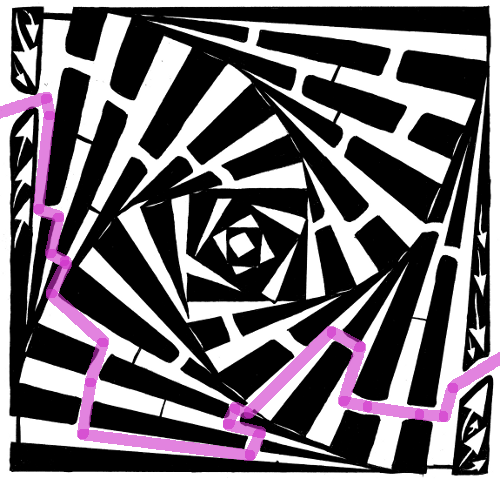
Stacked and Swirled Boxed Illusion Maze

Stacked and Swirled Boxes Maze by Yonatan Frimer
Awesome optical illusion maze of a stack of boxes stacked and swirled.
Maze entrance and exit are marked by arrows.
Can't solve it, check out the maze solution to stacked and swirled maze

Tuesday, January 18, 2011

Fish and Volcano Mazes, For the Learn To A Maze Book by Yonatan Frimer

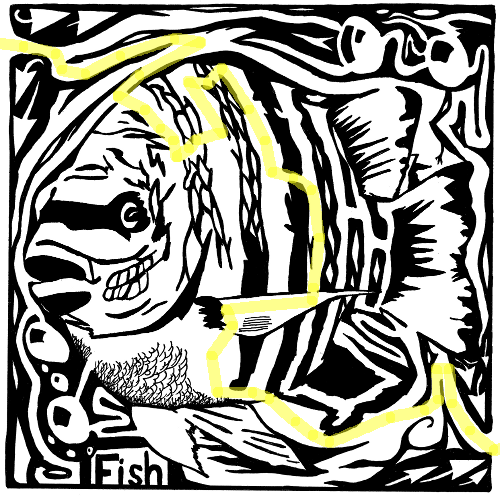
F is for Fish Maze
Maze of a fish for the letter F

Click for Maze Solution of Fish Maze
Maze of a tropical fish. The brave swimmers of our planet's waters. Maze starts in the upper left corner and maze ends in the lower right corner, marked by the arrows. This maze goes with the maze of the letter F for the kids book, "Learn To A Maze" Which uses mazes to teach kids the alphabet. By Yonatan Frimer.

You can also find Fish Maze online at these links:

Sell Art Online


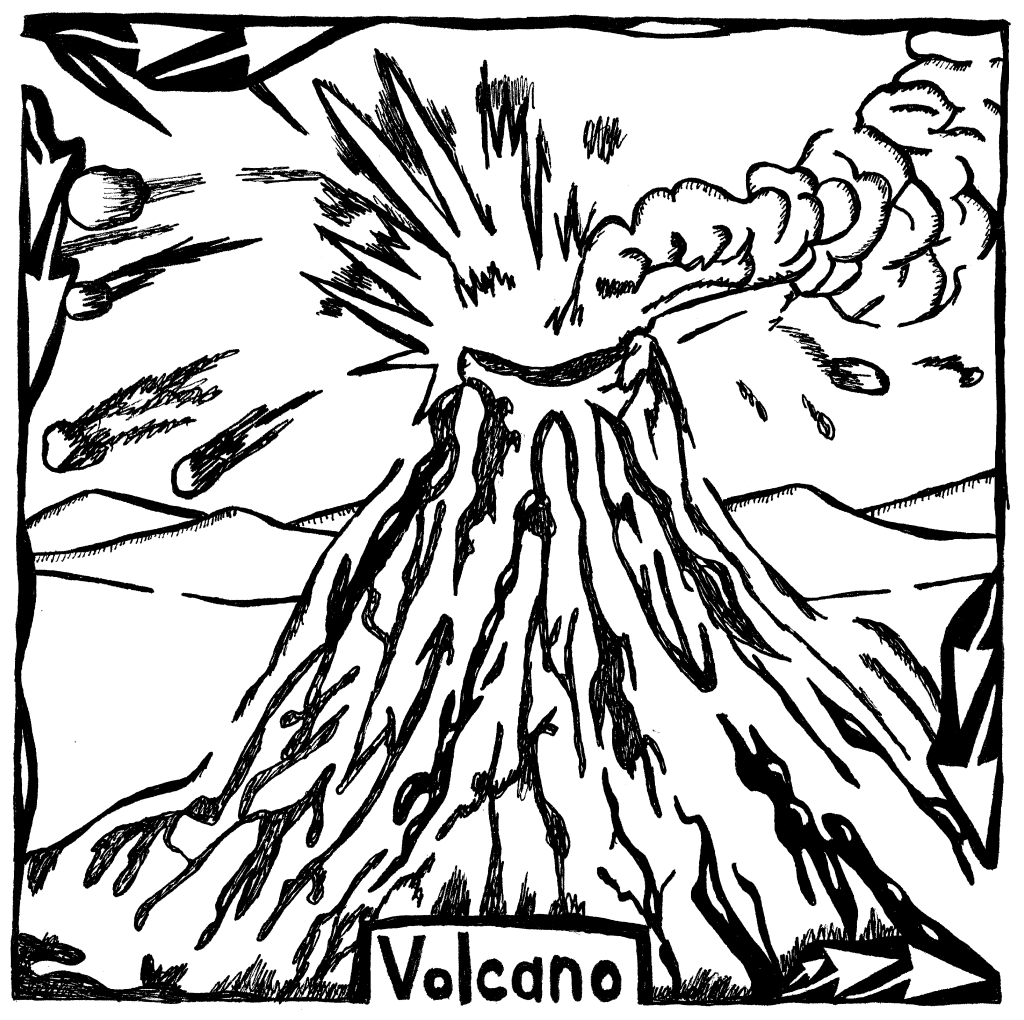
V is for Volcano Maze
Yonatan Frimer Maze of the Volcano

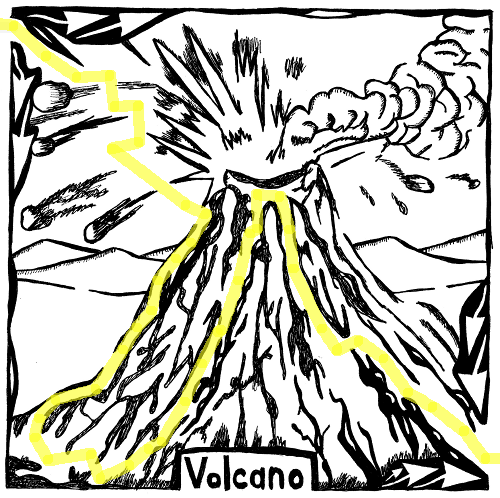
Click for Maze Solution of Maze of the Volcano
Maze of an erupting volcano, with magma and lava forming the walls of the maze. The maze starts in the upper left corner and the maze exits in the lower right corner. This maze goes with the maze of the letter V for the kids book, "Learn To A Maze" Which uses mazes to teach kids the alphabet. By Yonatan Frimer.

You can also find Fish Maze online at these links:
Sell Art Online

maze, volcano, fish, mazes, volcano maze, fish maze, art, maze art, puzzle, fun, letter v, letter f, tropical fish, fish mazes, volcano maze art, puzzle fun, yonatan, frimer, yonatan frimer, yfrimer

Monday, January 10, 2011

O is for Ostrich Maze by Yonatan Frimer

O is for Ostrich Maze
Ostrich Maze

Click for Maze Solution of Ostrich Maze
Maze of an ostrich, a very big flightless bird that is the largest bird in the world and is larger than an average human. The entrance of the maze is in the upper left corner, and the exit is in the lower right corner of the maze. This maze goes with the maze of the letter O for the kids book, "Learn To A Maze" Which uses mazes to teach kids the alphabet. By Yonatan Frimer.


Source page for this maze of an ostrich

Yonatan Frimer Maze art on Flickr
Maze art prints for sale by Yonatan Frimer
Maze blog

Friday, June 25, 2010

Cartoon that is a maze of Middle East motorcycle speeding down the road of diplomacy in the direction of war, not peace. By Yonatan Frimer

Maze Cartoon of motorcycle of the Middle East speeding down the diplomatic road in the direction of war, not peace. Created by Yonatan Frimer

maze cartoon of road to peace or war motorcycle
Maze cartoon of a motorcycle lableled, "middle east" speeding down a road in the direction of war, and away from the direction of peace. Created by Yonatan Frimer
Click here for a printable, hi-res version of this maze
Click here for the maze solution to Motorcycle maze.
click here to view the latest maze cartoons by Yonatan Frimer
Click here to view maze art by Yonatan Frimer

More about this maze cartoon's topic:

by Herbert London 06/23/2010

The gathering storm in the Middle East is gaining momentum. War clouds are on the horizon and, as with conditions prior to World War I, all it takes for explosive action to commence is a trigger.

Turkey’s provocative flotilla—often described in Orwellian terms as a humanitarian mission—has set in motion a flurry of diplomatic activity, but if the Iranians send escort vessels for the next round of Turkish ships, it could present a casus belli.

It is also instructive that Syria is playing a dangerous game with both missile deployment and rearming Hezbollah. According to most public accounts, Hezbollah is sitting on 40,000 long-, medium- and short-range missiles and Syrian territory has served as a conduit for military material from Iran since the end of the 2006 Lebanon War.

Should Syria move its own scuds to (Click here to read the full article)

Thursday, June 10, 2010

A Week In The Life Of Helen Thomas, A Maze Cartoon by Yonatan Frimer

Maze cartoon of a week in the life of Helen Thomas. By Yonatan Frimer

Week in the life of Helen Thomas

Maze cartoon of a week in the life of Helen Thomas. First she tells the Jews to go back to Germany, then says she is sorry, then quits her job.
Created by Yonatan Frimer
Click here for a printable, hi-res version of this maze
Click here for the maze solution.

Links to more Yonatan Frimer Mazes:
Latest maze cartoons on Team Of Monkeys Political Maze
Political Maze - Daily cartoon on Go Comics
Ink Blot Maze - Maze Art by Yonatan Frimer
Buy maze art on Fine Art America
Maze Blog

What is this maze talking about? learn more...

Helen Thomas's controversial voice

I am appalled that Helen Thomas's comments on Israel prevent her from speaking at Walt Whitman High School's commencement ["Helen Thomas bows out of speech," Metro, June 7]. I am also disgusted that Ari Fleischer and Lanny Davis conducted a campaign to punish Ms. Thomas, no doubt as retribution for her outspoken questions when they served in earlier administrations. Freedom of speech, however, is lost to their petty maneuvering.

Most of us would not agree with Ms. Thomas's unfortunate and seemingly uninformed comments about where Jews might live in peace. But she has the right to say what she thinks, and listeners can decide whether she is foolish, biased and out of touch. Had she spoken at Whitman, perhaps she would have retracted, perhaps she would have lamented further . . . or maybe not.

Whitman's cancellation under...Read entire article

Photography Prints

Some other popular mazes:

Monday, May 31, 2010

Cartoon maze of Sarah Ferguson accepting bribes, by Yonatan Frimer

Cartoon Maze of Sarah Ferguson taking bribes.
Cartoon maze of Sarah Furguson taking a bribe from a trap.
Cartoon maze of Sarah Ferguson thinking about taking money out from a bear trap which is labeled "News Of The World" and says, "I am going to try and grab it, Hopefully it's not a trap." Created by Yonatan Frimer
Click here for a printable, hi-res version of this maze
Click here or on the image for the solution to the maze.

Want more mazes? check out these maze links:
Political Maze on Go Comics
Team Of Monkeys Maze Cartoons
Ink Blot Mazes Maze Art
Maze art print-on-demand on Fine Art America

This maze topic in the news.....

Sarah Ferguson Caught in $750K Bribery Scandal

1274705968_sarah-ferguson-290.jpg
Sarah Ferguson was caught on tape accepting cash from an undercover journalist in exchange for access to her ex husband, Prince Andrew, Britain's special representative for international trade and investment.

"Five hundred thousand pounds [approx $750,000] when you can, to me... [to] open doors," Ferguson, 50, says on videotape during ....(Read More)

Sunday, May 23, 2010

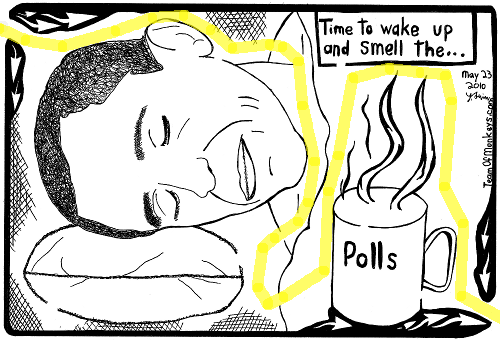
Wake up and smell the..... by Yonatan Frimer

Maze Cartoon Obama sleeping and ignoring the polls:

Obama President Polls Maze Cartoon

Editorial cartoon maze of President Obama sleeping as a hot cup of coffee marked "Polls" is next to him and a caption that reads, "Wake up and smell the....." Created by Yonatan Frimer.
Click here for a printable, hi-res version of this maze
Click here or on the image for the solution to the maze.

More mazes by Yonatan Frimer and Maze Cartoons for you:
Political Maze Cartoon on Comics Sherpa, by Yonatan Frimer
Editorial Cartoon Mazes on Team Of Monkeys
Maze Art on Ink Blot MazesLinkBuy maze art

This maze topic in the news:

Barack Obama Sees Approval Ratings Decline After Pro-Abortion Elena Kagan


Washington, DC (LifeNews.com) -- President Barack Obama has seen has approval ratings decline in the aftermath of his selecting pro-abortion Solicitor general Elena Kagan for the open Supreme Court position. Obama's approval ratings are at one of their lowest points in the last month and heading back down to their health care-dominated levels. The Rasmussen Reports daily shows 45%...(read more)

Sunday, May 2, 2010

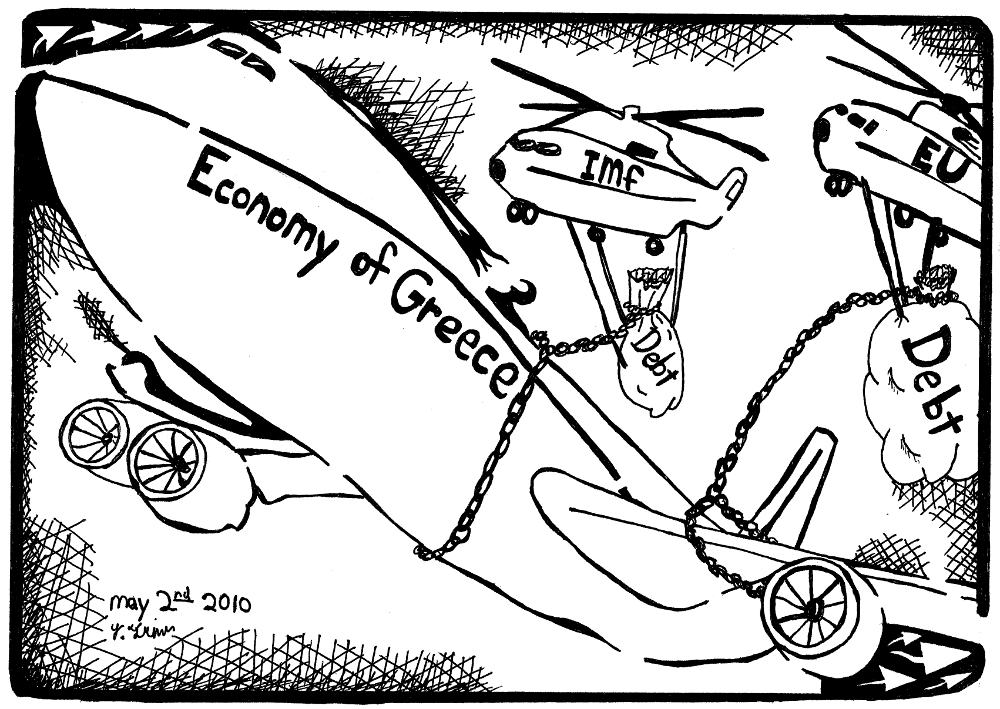
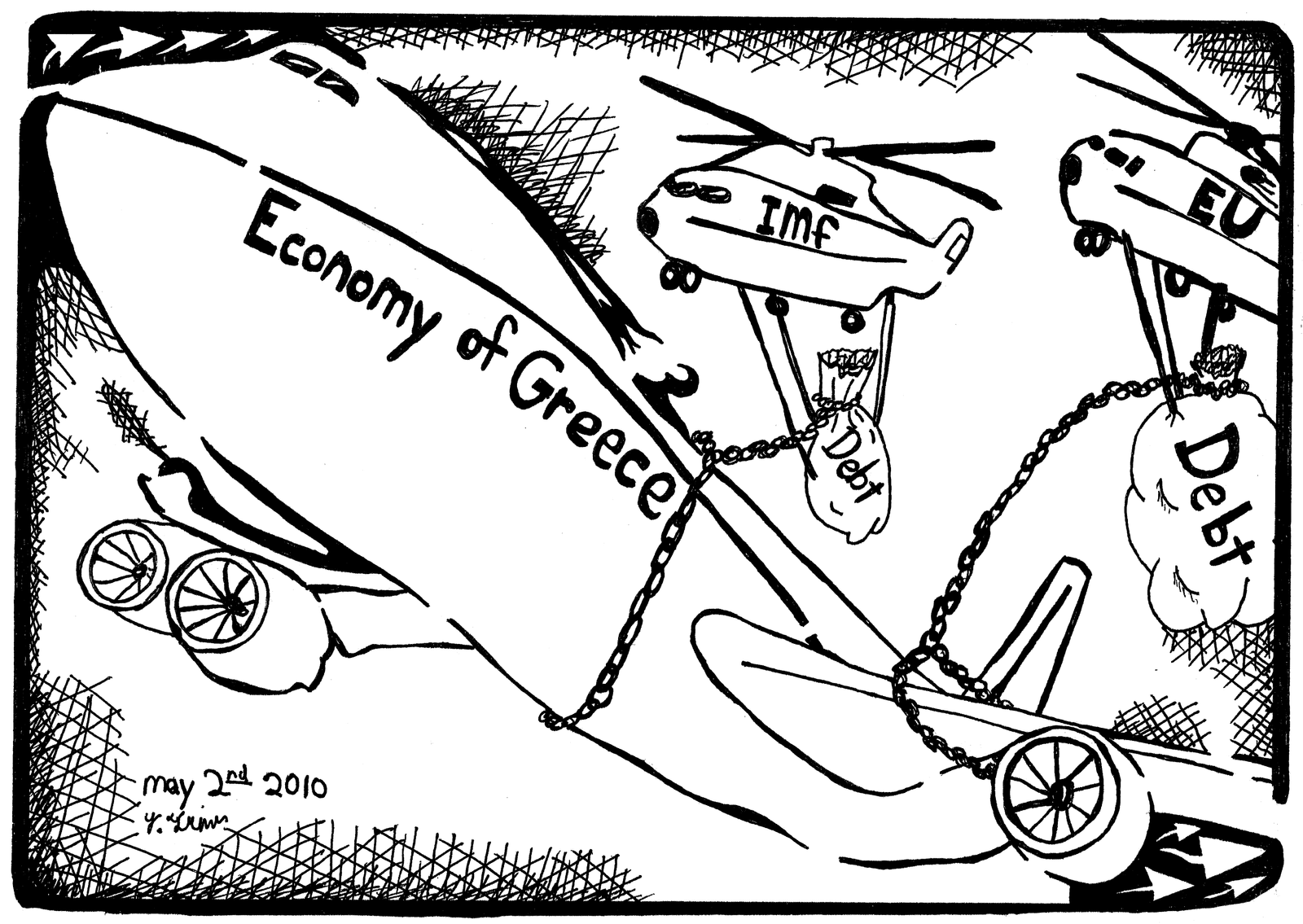
Cartoon Maze Editorial on the Economy of Greece By Yonatan Frimer

Maze Cartoon on the Economy of Greece.

Maze Cartoon for Editorial use on the Economy of Greece. A 747 marked "Economy of Greece" flys while chained to two bags of debt that are carried by the IMF and EU. Created by Yonatan Frimer


You can check out more of Yonatan Frimer's maze art at:
Political Cartoon Maze
Maze Art
Maze art for sale
Maze Blog
Another Maze Blog by Yonatan Frimer
And yet another maze blog

Maze Cartoon topic in the news:

EU/IMF Greece Plan Sees Around EUR110 Billion In Funding Gap

BERLIN -(Dow Jones)- Greece faces a funding gap of around EUR110 billion over the next three years, according to the details of a bailout plan from the International Monetary Fund and the European Union seen by Dow Jones Newswires Sunday.

Earlier Sunday, Greek Finance Minister George Papaconstantinou said that the new measures imposed to secure access to the unprecedented bailout package are the harshest and most austere ever imposed in European history.

The plan, dated May 2, didn't give details of how much each euro-zone country and the IMF will give in loans.

"We anticipate covering the program's financing requirements with financial support from euro-area member states and the IMF while strengthening access to the private capital market," the document said.

"Notwithstanding the significant fiscal adjustment, we project a public financing gap of around 110 billion (euros), for the program period, which we expect to cover through matching bilateral lending support from euro area member states and through IMF support," said the plan.

According to the document...Read more:

Tuesday, April 20, 2010

Wednesday, February 17, 2010

The Tut Puzzle By Rossella Lorenzi

The Tut Puzzle By Rossella Lorenzi

King Tut family tree

Revealed in DNA study: King Tut's family tree


King Tut, the best-known pharaoh of ancient Egypt, has been puzzling scientists ever since his mummy- and treasure-packed tomb were discovered in 1922 the Valley of the Kings by British archaeologist Howard Carter.

Only a few facts about his life are known.

While he lived in Amarna, his name was Tutankhaton ("honoring Aton" -- the sun god).

When he ascended the throne in 1333 B.C., at the age of nine, and moved to Thebes, he changed his name to Tutankamun ("honoring Amun" -- a traditional cult).

He married 13-year-old Ankhesenpaaten, the daughter of Akhenaten and Nefertiti, on his accession to the throne and reigned until his death in 1325 B.C., aged 19.

He was a pharaoh of the 18th Dynasty, probably the greatest of the Egyptian royal families.

He has been believed to be either the son of the minor king Smenkhkare or the offspring of Amenhotep III, the father of the "heretic" pharaoh Akhenaten (1353-1336 B.C.)

Another leading theory suggested that King Tut was sired by Akhenaten, the revolutionary pharoah who established the capital of his kingdom in Amarna, introducing a monotheistic religion that overthrew the pantheon of the gods to worship the sun god Aton.

Doubts also remain about King Tut's mother. Scholars have long debated whether he is the son of Kiya, Akhenaten's minor wife, or Queen Nefertiti, Akhenaten's other wife.

Evidence that Tutankhamun was the child of Akhenaten has come from an inscribed limestone block pieced together by Hawass in December 2008.

The block shows the young Tutankhamun and his wife, Ankhesenamun, seated together. The text identifies Tutankhamun as the "king's son of his body, Tutankhaten," and his wife as the "king's daughter of his body, Ankhesenaten.”

According to Hawass, "the only king to whom the text could refer as the father of both children is Akhenaten."

Egyptologists also debated whether two fetuses found in his tomb were the stillborn children of King Tut and his wife Ankhesenpaaten, who had changed her name to Ankhesenamun, or if they were placed in the tomb with the symbolic purpose of allowing the boy king to live as newborns in the afterlife.

A series of X-rays taken by British scientist Ronald Harrison in 1968 revealed a bone fragment in his skull, prompting speculation that a blow to the head killed the boy pharaoh.

In 2005 the mummy underwent a series of CT scans, which revealed that the fragments were not broken because of an injury incurred before death, but during the embalming process.

It also ruled out that the boy pharaoh crushed his chest when falling from his chariot, as suggested by American Egyptologist Denis Forbes.

While establishing that the boy king was about 1.70 metres (4 feet, 9 inches) tall, the CT scan showed that the king had a small cleft in his hard palette, the lower teeth slightly misaligned, and the overbite characteristic of other kings of from his family.

It rejected the diagnosis of an abnormal curvature of the spine and fusion of the upper vertebrae, which would have indicated King Tut suffered from a rare disorder called Klippel-Feil syndrome, a condition often associated with scoliosis which makes sufferers look as if they have a short neck.

The most important anomaly was a fracture of the left lower femur (thighbone). Some members of the team who examined the 17,000 images of the CT scan, suggested that King Tut suffered an accident in which he broke his leg badly, leaving an open wound, with infection setting in.

Other members of the team believed it was also possible that the fracture was caused by the embalmers.

In 2007, a black, leathery, shriveled and cracked King Tut emerged with a toothy smile from his sarcophagus, showing his face to the world for the first time.

The rest of the body, which despite restoration work carried out over the past two years resembles a badly burnt skeleton, remain covered with beige linen.

Other Puzzles:

Simon and Garfunkel Maze

For more mazes like this one, check out:
Team of Monkeys . com - Maze Cartoons
Ink Blot Mazes : Maze Art

Thursday, January 21, 2010

'Intelligent' oil droplet navigates chemical maze by Colin Barras


'Intelligent' oil droplet navigates chemical maze by Colin Barras

There's some humbling news from the chemical world for anyone who has ever found themselves lost in a garden maze. A simple droplet of organic solvent can find its way through a complicated labyrinth with nothing more to go on than a slight pH difference.

Bartosz Grzybowski's team at Northwestern University in Evanston, Illinois, used a common polymer to fashion a two-dimensional labyrinth some 2 centimetres on each side. They then flooded the maze with strongly alkaline potassium hydroxide solution, before placing a hydrochloric acid-soaked chunk of gel at the maze exit.

After about 40 seconds they placed a droplet of mineral oil containing hexyldecanoic acid at the maze entrance. The oil, which cannot mix with the potassium hydroxide solution, sits on the surface. But it remains still only for a matter of seconds – it soon begins tearing around the maze at speeds of up to 10 millimetres per second, sniffing out the shortest path to the acid-soaked gel, and solving the maze in the process.

"In the movie files you can see the droplet makes decisions," says Grzybowski. "It goes left along the wrong path, decides there's something fishy with that and so it reverses. It looks almost alive."

Primitive intelligence

But while Grzybowski says the droplet displays behaviour that might be called "primitive intelligence", there's a simple chemical mechanism at work.

The droplet leaches its acid into the surrounding solution, losing hydrogen ions in a process known as deprotonation – a process that affects the surface tension of the droplet itself.

"But to the front and rear of the droplet [the surrounding solution] has a different pH," he says, because of diffusion from the acid-soaked gel at the maze exit. Those tiny pH differences affect the amount of deprotonation that happens at the front and rear of the droplet, and this asymmetry sets up a surface tension gradient that forces the droplet into motion. "I would say the droplet is self-propellant," he says.

Grzybowski's team thinks that the behaviour could have implications for cancer treatments. They would like to develop micelles – aggregates of molecules such as balls of lipids – that can navigate pH gradients in the body. "A good reason for that is cancer is more acidic than the rest of the body," Grzybowski says.

Slime mystery

But the chemical behaviour could also offer an explanation for the apparently intelligent behaviour of the slime mould Physarum polycephalum, which 10 years ago was shown to possess similar maze-solving abilities by Toshiyuki Nakagaki, now at Hokkaido University in Sapporo, Japan.

"The [new] finding is interesting since it gives an insight of possible physical mechanisms for Physarum to find a path in the maze," Nakagaki says.

Journal reference: Journal of the American Chemical Society, DOI: 10.1021/ja9076793

Some cool mazes for you to enjoy after reading this article....


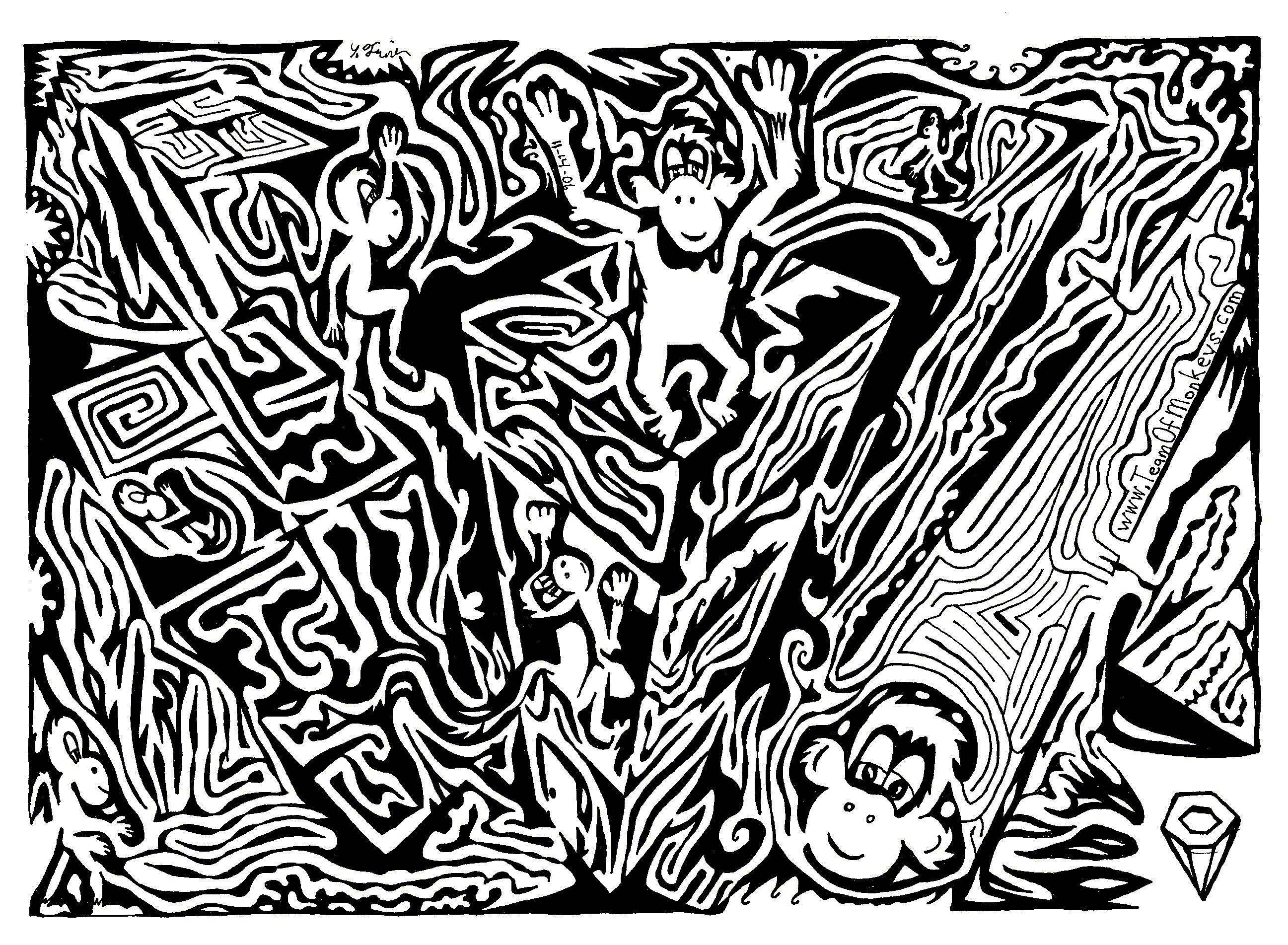
Hallucamazenic Maze-A-Delic - Ink On Paper, Winter 2006,

by Yonatan Frimer
Maze A Delical mazes

www.TeamOfMonkeys.com
Your source for mazes.


Maze Kong - Ink on Paper
Maze Kong

Maze of the Statue of Liberty - 2009
maze of the Statue Of Liberty - InkBlotMazes Ink Blot Mazes, By Yonatan Frimer, your humble maze artist Ink Blot Mazes, Optical Illustion, celebrity, icon inkblot
Maze of Liberty - 2009 - Yonatan Frimer

Which maze of the statue of liberty do you like better. The psychedelic one or the line art one? Answer with care down bellow in the comments. Thanks

Psychedelic Liberty Maze

statue of liberty maze pschedelic maze art
Maze of the Statue of Liberty

Saturday, November 7, 2009

Star of David Psychedelic Maze, By Yonatan Frimer


Jewish Star Magen David Maze Art


Mazes and mazes and more mazes can be found at http://www.teamofmonkeys.com and also at http://www.inkblotmazes.com.

To solve the maze, you need to find the entrance and exit arrows, and then the path that connects them without crossing over any of the dark ink.

Created By Yonatan Frimer